
acumencomms

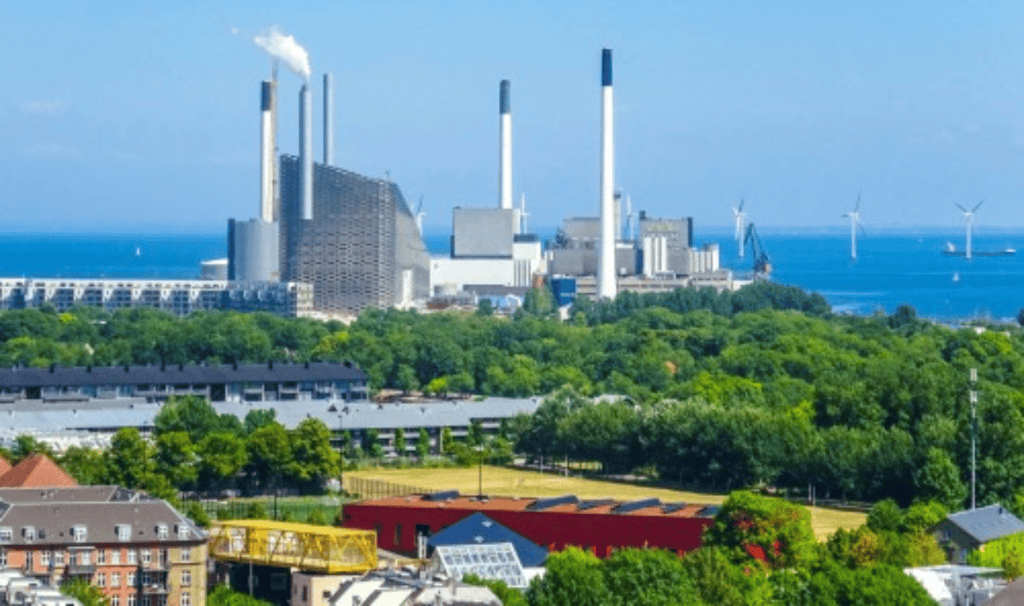
Power plant with wind turbines and industrial facilities near the coast, highlighting sustainable en.

End-of-Life Study

New Study Confirms Fluoropolymers are Effectively Managed at their End-of-Life 


Brussels, May 2026

Download Full Statement

The Fluoropolymers Product Group (FPG) has published a new study, prepared by Ramboll Management Consulting, examining the end-of-life management of fluoropolymers in the EU, including their occurrence in waste streams, treatment routes and emissions. It is the second in a series of FPG publications (which also includes an assessment of alternatives published last week and a socioeconomic analysis) aimed at building a comprehensive, evidence-based foundation for chemical regulation in the EU.

The study finds that fluoropolymers represent a negligible share of total EU waste, less than 0.01% by mass (approximately 23,500 tonnes per year), and rarely occur as a separate waste-stream. Because they are typically used in very small quantities and often embedded as coatings, seals, linings or insulation within complex products, their end-of-life fate is determined by the treatment of host products rather than by the material itself.

The study confirms that the dominant end-of-life route is hazardous waste incineration, which accounts for approximately 50% of collected fluoropolymer waste. Crucially, it finds that under regulated operating conditions, fluoropolymers are destroyed with a 99.9999% mineralisation rate, with water-soluble PFAS emissions remaining below 1 gram per tonne of material treated. Municipal waste-to-energy, which handles a further 22%, achieves comparable destruction performance. Landfilling accounts for approximately 13% and continues to decline in line with EU waste policy. Recycling is technically feasible, but the potential of post consumer recycling is constrained by low volumes, integration into complex products, contamination, limited sorting infrastructure, market barriers and regulatory uncertainty.

The report also considers the upstream contribution of fluoropolymers to waste prevention. It stresses that, according to downstream user feedback, fluoropolymers extend component and system lifetimes by factors typically in the range of 3 to 10 times. In many cases, small fluoropolymer-based components such as gaskets and seals protect much larger systems, creating leverage effects on total waste generation well beyond the component’s own mass.

Fluoropolymers are a negligible waste stream that can be effectively managed at end of life and delivers significant upstream benefits,” said Caroline Andersson, Director of FPG. “This study shows that their end-of-life profile is fundamentally different from the PFAS of regulatory concern and further supports the case for a full exemption of fluoropolymers in the proposed EU PFAS restriction”.

The findings of the study are clear. Effective end-of-life management, negligible waste and emissions contribution, combined with the intrinsic properties of these materials and industry commitments for responsible manufacturing mean that fluoropolymers are not an unacceptable risk.  FPG urges for proportionate regulatory approaches that reflect these characteristics and thus calls for a full exemption of fluoropolymers from any blanket restriction. FPG supports a regulatory approach that targets emissions rather than materials and recommends a risk-based restriction framework that recognises the voluntary manufacturing commitments as a basis for alternative risk management.

More Information


A yellow truck driving through a dense green forest on a paved road.

Assessment of Alternatives to Fluoropolymers

New Study Reaffirms Essentiality of Fluoropolymers for Strategic EU Industries 


Brussels, 29 April 2026

Download Full Statement

The Fluoropolymers Product Group (FPG) has published a new study, prepared by Ramboll, assessing the availability and feasibility of alternatives to fluoropolymers in selected critical applications across the transport and electronics and semiconductor sectors. The report provides a detailed, real-world assessment of whether currently identified alternatives are available and can meet industrial requirements. The report confirms that in many critical uses they are either not available or simply do not match the necessary criteria to be considered a viable alternative to fluoropolymers, reinforcing FPG’s call for a full exemption of fluoropolymers from the proposed REACH restriction. It is the first in a series of upcoming FPG publications (which will also include an analysis of fluoropolymers at their end-of-Life and a socio-economic analysis) aimed at building a comprehensive, evidence-based foundation for chemical regulation in the EU.  

The analysis, conducted in line with the European Chemicals Agency (ECHA) methodology for Analysis of Alternatives, shows that for the applications assessed, viable alternatives fail on key technical performance criteria or are simply not available. In automotive applications, the materials assessed are not viable replacements for fluoropolymers, and the technical barriers involved mean this is unlikely to change in the foreseeable future. In semiconductor applications, alternatives either do not meet the required performance standards or have not been sufficiently validated under real operating conditions. 

The study also highlights that substitution in complex systems cannot be assessed at substance level alone. Fluoropolymers are embedded across multiple components within the same application, meaning realistic substitution must consider the full product, supply chain, and lifecycle. This complexity also means that the challenges identified are not exceptional but reflect the technical reality of working with fluoropolymers across high-performance applications, where each use presents its own distinct barriers and no basis exists to assume feasibility where it has not been demonstrated. 

The Assessment of Alternatives clearly shows that, in the examined case studies, functionally equivalent alternatives are not available or cannot responsibly replace existing materials” said Caroline Andersson, Director of FPG. “Policy must support innovation and research, while safeguarding performance, safety and resilience in strategic value chains. Fluoropolymers should therefore be fully exempted to avoid unintended impacts on critical European industries. 

The report highlights that availability, safety, economic viability, supply chains, and sustainability must be taken into account when evaluating fluoropolymers. Acknowledging their distinct and unique properties, established safety profile and strategic importance, a full exemption within the REACH restriction would facilitate timely implementation, reduce administrative complexity and sustain EU competitiveness and security. In this context, FPG supports a regulatory approach that targets emissions rather than materials and recommends a risk-based restriction framework that recognises the voluntary manufacturing commitments as a basis for alternative risk management. 

Find out more here.


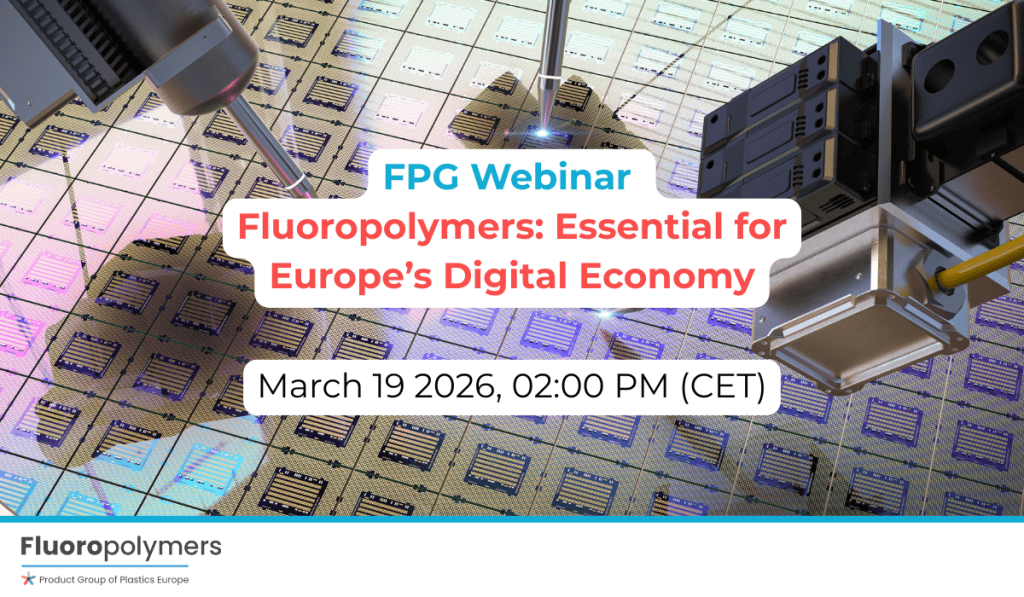
Close-up of semiconductor manufacturing equipment with fluoropolymer components.

FPG Webinar: Essential for Europe’s Digital Economy

The Fluoropolymers Product Group (FPG) invites you to the Webinar: 
Essential for Europe’s Digital Economy

We are pleased to invite you to the upcoming FPG webinar on the essential role of fluoropolymers in Europe’s digital economy, taking place on the 19th of March at 14:00 (CET).


Fluoropolymers’ unique set of properties make them critical materials for modern semiconductor manufacturing and enable key digital infrastructure applications across data centres, high-speed connectivity, and advanced electronic systems that collectively underpin Europe’s digital economy.


You will hear directly from guest speakers representing leading digital associations (ESIA, Global Electronics Association, Orgalim, and DigitalEurope) on why fluoropolymers are indispensable to the EU’s digital transition, the benefits they deliver across key sectors, and their perspectives on the proposed PFAS REACH restriction.


FPG will also provide updates on activities related to the PFAS REACH restriction and its work to defend the continued use of fluoropolymers. 


FPG and its members remain committed to the safe use, sustainable production, and responsible end‑of‑life management of fluoropolymers. FPG calls for a full exemption of fluoropolymer manufacture and use under the PFAS restriction and urges swift clarity on their long‑term regulatory future.

Speakers:

Maxime Caste – European Semiconductor Industry Association (ESIA)

Maxime Caste is the Sustainability Manager for the European Semiconductor Industry Association (ESIA). Maxime is coordinating advocacy on EU-based chip manufacturing for chemicals policy, including the PFAS Restriction and the POPs Regulation. 

Maxime has 7 years’ experience working on EU chemicals legislation, acquired through his role as policy analyst for chemicals policy at EU Issue Tracker, as EHS Manager and then Senior Policy Manager for EUROBAT, and as regulatory affairs manager for the Association of Manufacturers and Formulators of Enzyme Products (AMFEP). 

The European Semiconductor Industry Association (ESIA) is the voice of the semiconductor industry in Europe. Its mission is to represent and promote the common interests of the Europe-based semiconductor industry towards the European institutions and stakeholders in order to ensure a sustainable business environment and foster its global competitiveness 

Tim Sollberger – DIGITALEUROPE 

Tim Sollberger is Senior Manager for Sustainability Policy at DIGITALEUROPE. Tim has led the work on chemicals policy since 2022, and is responsible for other policy areas across environment, responsible business conduct, competitiveness and single market. Previously, he worked for several years on EU affairs in corporate in-house and consulting roles, advising leading technology, energy and chemicals companies on EU environment and energy policy. He holds degrees in business administration and economics from the University of Bern in Switzerland, as well as a masters in economics from KU Leuven. 

DIGITALEUROPE is the leading trade association representing digitally transforming industries in Europe. Together with our members, we shape the industry policy positions on all relevant legislative matters and contribute to the development and implementation of relevant EU policies. Our membership represents over 56,000 businesses that operate and invest in Europe. It includes 120 corporations which are global leaders in their field of activity, as well as 43 national trade associations from across Europe. 
 

Julio Mateos Basco – Orgalim 

Julio Mateos is an Adviser for Environment at Orgalim, where he has spent the past three years driving the association’s work on chemicals policy, with a strong focus on PFAS, chemical legislation and circular economy regulatory developments affecting Europe’s technology industries. He holds a Master’s degree in European Interdisciplinary Studies with a specialisation in Public Affairs and Policies. 

Orgalim represents Europe’s technology industries, providing innovative technology solutions which are underpinning the twin green and digital transitions and can unlock a greener, healthier, and more prosperous future for the European Union and its citizens. As major downstream users and article manufacturers under the REACH Regulation, our industries are fully committed to reducing the content of hazardous substances in their products to support a more circular economy and fully support that individual substances that pose an unacceptable risk due to their properties and use profiles should be restricted or regulated based on scientific evaluation. 

Diana Radovan – Global Electronics Association 

Dr. Diana Radovan is the Director of Sustainability Policy at Global Electronics Association Europe GmbH. Dr. Radovan is responsible for leading the engagement of the electronics industry with policy makers on policies related to chemicals, materials, and the environment, with PFAS being a core priority. Dr. Radovan has 15 years of global regulatory experience in different sectors and a doctorate in physical chemistry from the Technical University of Dortmund, Germany.  

The Global Electronics Association is the voice of the electronics industry, working with thousands of members and partners to build a more resilient supply chain and drive sustainable growth. The Association advocates for fair trade, smart regulation, and regional manufacturing, and educates stakeholders on industry practices, actionable intelligence, and technical innovations to empower the future. It serves the entire electronics ecosystem and collaborates with governments and companies worldwide to advance a trusted and prosperous electronics industry. 

European Chemicals Agency flag flying in the sky, representing chemical safety and regulation.

FPG’s Position Statement on the Case for Exempting Fluoropolymers

Fluoropolymers Product Group (FPG) Position Statement:

The Case for Exempting Fluoropolymers: Safeguarding European Strategic Resilience


Brussels, 20 January 2026

Download Full Statement

Executive Summary: A Necessary Exemption

The Fluoropolymers Product Group (FPG) welcomes the acknowledgement from the PFAS restriction dossier submitters in their August 2025 Background Document that fluoropolymer production in Europe is critical and should continue under strict emission controls, a commitment already implemented through the FPG Manufacturing Programme.

However, the proposed regulatory approach is fundamentally flawed: it is overly complex, disproportionate, and risks undermining Europe’s industrial competitiveness and strategic autonomy. Fluoropolymers do not pose an unacceptable risk and can be responsibly managed.

We propose a complete and full exemption for fluoropolymer manufacture and uses based on the weight of scientific evidence and their critical role in the European economy.


The Problem: Undermining Strategic Sectors and Creating Uncertainty

  1. Strategic Risk: Fluoropolymers are essential materials for manufacturing and chemical processing industries. Curtailing the use of fluoropolymers would jeopardize Europe’s industrial base and resilience in critical technologies. Fluoropolymers are also indispensable in critical applications – from semiconductors and green hydrogen to medical devices and renewable energy – enabling Europe’s digital and ecological transitions and reinforcing its strategic autonomy.
  2. Flawed Risk Assessment: The updated Background Document fails to meet the requirements of the REACH Regulation for ‘unacceptable risk’ (Article 68) because restrictions are justified based on persistence rather than on assessed risk and neglecting the scientific principle of proportionality. Fluoropolymers are polymeric PFAS that exhibit different properties and synthesis pathways compared to other non-polymeric PFAS. They present a low, manageable risk, especially given industry-led initiatives for safe lifecycle management.
  3. Unworkable Timelines and Derogations: The proposed 5- and 12-year derogations are insufficient given the long R&D and certification timelines required in many sectors. These short timeframes generate market uncertainty, stifling investment and innovation. Furthermore, substitution often entails costly system redesign, performance loss, and lengthy requalification; in many cases, no viable drop-in alternatives exist or will be available in time.
  4. Complexity and Technical Chaos: The Background Document restriction proposal creates a burdensome regulatory landscape that will make compliance and enforcement extremely challenging. This complexity is aggravated by several technical flaws:
  • The proportionality assessment is biased by the reliance on generic Environmental Release Categories (ERCs) for emission estimates, which significantly overestimate actual emissions rather than using precise, sector-specific data.
  • The introduction of a new emission limit of 0.01% to all compartments for all PFAS for continued manufacturing lacks an adequate assessment of its technical and economic feasibility.
  • Without effective sampling, testing, and adequate knowledge among border authorities, enforcement across the EU internal market and external borders will remain insufficient to control products containing PFAS.

The Solution: A Pragmatic, Risk-Based Regulatory Focus

A broad, ‘one-size-fits-all’ restriction lacks proportionality and is doing further damage to business confidence. The FPG calls for a risk-based differentiated approach that reconciles industrial and societal resilience:

  1. Full Exemption and Clarity: The PFAS restriction should provide a full exemption on fluoropolymer manufacture and uses. We need immediate clarity over the longterm future of fluoropolymers in the EU to avoid investment uncertainties.
  2. Regulate Emissions, Not Materials: Since concerns about fluoropolymers relate mainly to emissions during manufacturing, processing, use, and end-of-life stages, the focus should shift entirely to regulating and implementing robust emission reduction strategies.
  3. Leveraging Existing Legislation: The established framework of the Industrial Emissions Directive (IED) provides a mechanism for managing risks associated with emissions. The IED sets permitting conditions and emission limit values based on Best Available Techniques (BAT/BREF), which provides certainty for manufacturers to align their voluntary emission reduction efforts with official EU standards.

Conclusion

Exemption with robust emission reduction strategies is a pragmatic solution that addresses concerns on PFAS pollution while alleviating industry uncertainty. A risk-based restriction that recognises the voluntary manufacturing commitments as a basis for alternative risk management will ensure timely implementation, simplify obligations, and sustain EU competitiveness and security.

To maintain Europe’s industrial base, support the green and digital transitions, and protect strategic autonomy, the only viable path is to distinguish between PFAS categories and provide a full exemption for fluoropolymers.


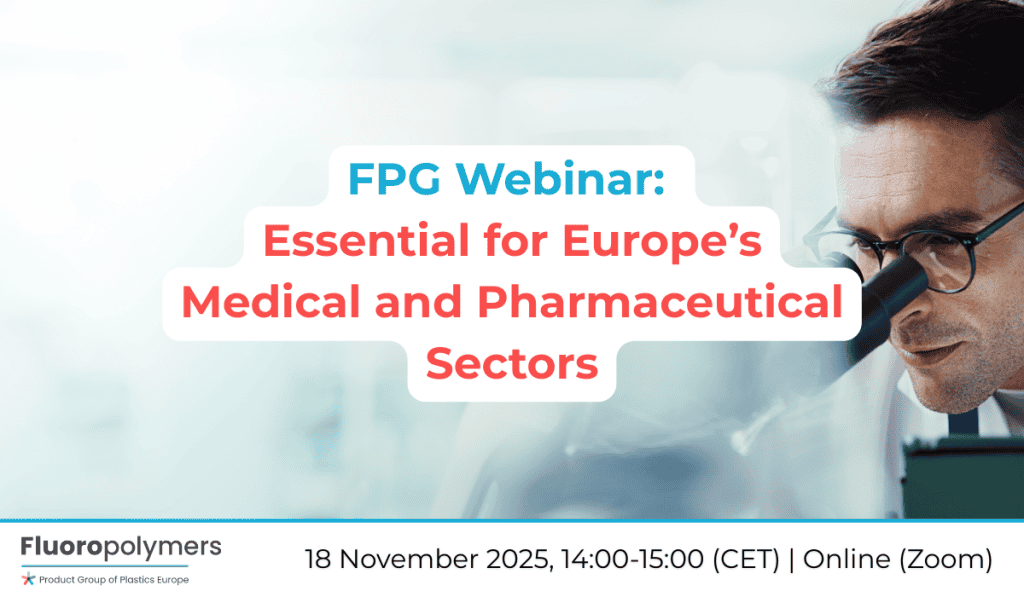
Fluoropolymers webinar on plastics for Europe's medical and pharmaceutical sectors.

FPG Webinar: Essential for Europe’s Medical and Pharmaceutical Sectors

The Fluoropolymers Product Group (FPG) invites you to the Webinar: 
Essential for Europe’s Medical and Pharmaceutical Sectors

We are pleased to invite you to the upcoming FPG webinar on the essential role of fluoropolymers in Europe’s medical and pharmaceutical sectors.

Fluoropolymers are advanced materials that drive innovation and ensure safety across healthcare, from medical devices and pharmaceutical manufacturing to life-saving treatments. FPG and its members are committed to the continued safe use, sustainable production, and responsible end-of-life management of fluoropolymers.

Join FPG and experts from medical and pharmaceutical groups to discuss the vital role of fluoropolymers and share insights into the critical applications and benefits they bring to Europe’s healthcare sector.

Plastic manufacturing worker operating machinery at a factory.

FPG Webinar: Safe Handling of Fluoropolymers

The Fluoropolymers Product Group (FPG) invites you to the Webinar: 
Safe Handling of Fluoropolymers: Best Practices for Workplace Safety and Emissions Control

We are pleased to invite you to the upcoming webinar on the Safe Handling of Fluoropolymer Resins.

During this event, we will cover the safe handling, processing, and waste management of fluoropolymer resins, as published in the FPG Safe Handling Guide, available for free via www.fluoropolymers.eu.

FPG represents Europe’s leading fluoropolymer producers and experts. Fluoropolymers are currently indispensable in critical industry applications – from semiconductors and green hydrogen to medical devices and renewable energy.

The Guide is an essential pillar of FPG’s Manufacturing Programme; a voluntary, industry-led initiative, setting a new benchmark for emissions control in fluoropolymer production across European manufacturing sites to ensure the safe and continued use of these essential materials.

Plastic manufacturing worker operating machinery at a factory.

FPG Releases its Comprehensive Guide on Safe Handling of Fluoropolymer Resins

The Fluoropolymers Products Group Releases Comprehensive Guide on Safe Handling of Fluoropolymer Resins as part of its Manufacturing Programme

Brussels, 3 September 2025

Download Full Statement

The members of the Fluoropolymer Product Group (FPG) are pleased to announce the release of their updated guide for the safe handling, processing and waste management of fluoropolymer resins, aiming at equipping the industry and its downstream users with robust safety information and best practices in emission control.

The Guide for the Safe Handling of Fluoropolymer Resins is an essential pillar of FPG’s Manufacturing Programme; a voluntary, industry-led initiative, launched in September 2023. The Programme sets a new benchmark for emissions control in fluoropolymer production across European manufacturing sites to ensure the safe and continued use of these critical, advanced materials.

Overview of the Manufacturing Programme

At the end of 2024, FPG’s members completed the first milestone in their Manufacturing Programme by successfully meeting their emissions reduction targets for non-polymeric PFAS. The Programme comprises three pillars, more specifically:

  • An industry-led commitment to achieve average emissions factors for non-polymeric PFAS residues from polymerisation aid technology that is used in the fluoropolymer manufacturing process:
    • By end 2024: 0.009% to air; 0.001% to water.
    • By end 2030: 0.003% to air; 0.0006% to water.
  • A commitment to inform downstream users of fluoropolymers on their safe handling and use in the Guide for the Safe Handling of Fluoropolymer Resins.
  • A platform to exchange information on commercially available state-of-the-art technologies to minimise non-polymeric PFAS emissions in manufacturing.

The Safe Handling Guide

Through the Safe Handling Guide, FPG’s members have delivered on their commitment to equip industry and its downstream users with robust safety information and best practices.

This comprehensive guide, the first of two, covers essential materials such as PTFE, ETFE, FEP, PFA, PVDF, and ECTFE, which are widely used in various industries, including aerospace, transport, chemical processing, energy, medical devices, and technical clothing. It reflects current knowledge and best practices for handling fluoropolymer resins safely, minimising health risks and environmental impacts, and ensuring compliance with regulations across Europe and associated regions.

Fluoropolymers are renowned for their durability, safety, chemical inertness, and mechanical strength, making them indispensable in numerous applications. Any potential risks are covered in the manual with the corresponding safety measures. 

Providing detailed recommendations for precautionary safe handling and risk mitigation, the guide provides in-depth information on the different types of fluoropolymer resins, including their thermal properties and specific handling requirements. It also includes an extensive table summarising typical melting points, service temperatures, and processing temperatures for each polymer type.

Exemption of Fluoropolymers from REACH Restriction

FPG and its members are committed to the safe use and sustainable manufacturing of fluoropolymers, as well as to responsible end-of-life solutions.

Fluoropolymers are currently indispensable in critical applications – from semiconductors and green hydrogen to medical devices and renewable energy – enabling Europe’s digital and ecological transitions and reinforcing its strategic autonomy. The Commission has already indicated support for exemptions from the REACH Restriction, where substances are essential to these goals. In most such cases, the materials in question are fluoropolymers.

Fluoropolymers are biologically and chemically stable, insoluble, non-toxic, non-bioavailable, non-accumulative, and resistant to extreme temperatures and chemical interactions. They differ fundamentally from other PFAS and do not pose an “unacceptable risk” to the environment and human health (REACH, Article 68).

FPG supports enhanced regulation under existing legislation, such as the Industrial Emissions Directive (IED), and calls for a clear, proportionate framework of conditions and controls for critical uses.

FPG’s Safe Handling Guide, as part of the broader Manufacturing Programme, justifies exempting fluoropolymers from the REACH restriction, underpinned by clear, enforceable conditions that ensure environmental protection. By fostering balanced and evidence-based regulation, we can ensure that essential technologies supported by fluoropolymers continue to deliver solutions that benefit society and the environment alike.

“This comprehensive guide underscores our commitment to setting high standards for emissions control and ensuring the safe handling, processing, and waste management of these essential materials, critical for European industries. Together with FPG’s Manufacturing Programme and other initiatives, our industry is paving the way for a sustainable future,” said Ronald Bock, FPG Chairman.   

Read more on FPG’s Manufacturing Programme here: FPG Statement on the Manufacturing Programme 2025 – Plastics Europe

FPG’s Safe Handling Guide is available here.

FPG’s Statement on ECHA’s PFAS Background Document and response to the European Commission’s Chemical Industry Action Plan (CIAP): www.fluoropolymers.eu

More detailed information on the Manufacturing Programme, including the first part of the Safe Handling Guide and other FPG initiatives, will be discussed during FPG’s upcoming webinars. More information on these can also be found on FPG’s website.


European Chemicals Agency flag flying in the sky, representing chemical safety and regulation.

FPG’s Statement on ECHA’s Updated PFAS Background Document

Fluoropolymers Recognised: FPG’s Statement on ECHA’s Updated PFAS Background Document  

Brussels, 25 August 2025

Download Full Statement

With the recent publication of the updated PFAS Background Document by the European Chemicals Agency (ECHA), the Fluoropolymers Product Group (FPG) recognises the efforts made by the dossier submitters in reviewing and integrating new data and evidence from the public consultation. FPG also welcomes the further recognition of the significant socio-economic benefits of fluoropolymers.

In their document, the authorities are proposing extensive derogations for the manufacturing of fluoropolymers, providing operations are under controlled conditions. This approach reflects the voluntary manufacturing programme set forward by the FPG. These developments are an encouraging step in recognising the critical role of fluoropolymers to enable a wide variety of products of high societal value, vital for achieving key European policy objectives and strategies – particularly those aiming for the sustainable transition of the EU economy.

Nonetheless, recognising the strategic importance of these materials and the fact that they can be responsibly managed across their lifecycle, FPG remains convinced that fluoropolymers should be afforded a full exemption from the restriction, based on the weight of scientific evidence.

The updated Background Document was prepared by regulatory authorities from Denmark, Germany, the Netherlands, Norway, and Sweden, and may be further amended as ECHA committee reviews continue. The publication of the Background Document is an important step in ensuring transparency in the process.

We remain committed to supporting the ECHA process in the coming months by providing scientific evidence and data to inform decision-making.


The PFAS Background Document

What is the PFAS Background Document?

When a restriction dossier is submitted to ECHA, the proposal and its annexes become the “Background Document.” This document is usually confidential and shared only with stakeholders directly implicated in the restriction (such as industry associations or NGOs). 
 
The Background Document is updated by the dossier submitters, in the case of the PFAS restriction, Germany, Sweden, Denmark, the Netherlands, and Norway. Since 2023, these authorities have been reviewing and integrating information shared during the public consultation, including data and evidence from industry, civil society, organisations, and regulators. 
 
If new evidence justifies it, the Background Document is amended. Importantly, it is not the final PFAS REACH restriction, but it forms the basis for ECHA’s committees when drafting their opinions. ECHA has also confirmed that the document may continue to be updated during committee evaluation. 
 
Read the full Background Document, here: https://echa.europa.eu/hot-topics/perfluoroalkyl-chemicals-pfas  
 
Why the ECHA process matters
 
The ECHA restriction process is central to shaping EU chemicals policy. It ensures that decisions on PFAS are based on scientific evidence, socio-economic analysis, and transparency. By contributing data, evidence, and technical expertise, stakeholders like FPG help ensure that the committees’ work reflects the critical importance of fluoropolymers and the need for a balanced, risk-based approach. 
 
Ultimately, ECHA’s committees, the Committee for Risk Assessment (RAC) and the Socio-Economic Analysis Committee (SEAC), will finalise an opinion that guides the European Commission’s decision-making on the PFAS restriction.  

Eco-friendly plastic recycling symbol with greenery, promoting sustainability.

FPG Webinar: A Balanced Case for Fluoropolymers 

The Fluoropolymers Product Group (FPG) invites you to the Webinar: 
A Balanced Case for Fluoropolymers 

With the PFAS REACH restriction set to shape Europe’s industrial future, fluoropolymers stand out for their unique profile: chemically inert, non-bioavailable, non-toxic — and indispensable to strategic sectors including semiconductors, clean energy, medical technologies, aerospace, and transport.

These advanced materials are essential to modern life and cannot be replaced without significant compromises on safety, performance, and sustainability.

The Fluoropolymers Product Group (FPG) represents Europe’s leading producers and experts committed to the safe and responsible use of fluoropolymers.

This webinar will explore the science, present the latest insights on FPG’s initiatives and make the case for sustainable manufacturing and a differentiated regulatory approach.

We invite you to join this sector-wide discussion on alignment, collaboration, and the continued safe use of fluoropolymers

Agenda

Welcome | Caroline Andersson, FPG

What is FPG | Caroline Andersson, FPG

Setting the Scene Around the PFAS Restriction | Ronald Bock, AGC

FPG Manufacturing Programme and Wider Activities | Dries Maebe, Chemours

Q&A

Closing Remarks | Caroline Andersson, FPG

Compass used for precise measurement in material testing and quality control.

FPG Calls for Clarity on Fluoropolymers

FPG Calls for Clarity on Fluoropolymers

Brussels, 10 July 2025

Download Full Position Paper on the uPFAS Restriction

 Strategic Value of Fluoropolymers 

The Chemicals Industry Action Plan (CIAP), published on 8 July 2025, outlines the European Commission’s vision for addressing the challenges confronting one of the continent’s most vital economic sectors. The Fluoropolymers Product Group (FPG) notes that PFAS is a core element of the plan.  

As the Commission recognises the need for continued use for critical applications and strategic sectors, in which fluoropolymers play an essential role, we believe that the way to efficiently support all sectors is a fully risk-based, differentiated regulatory approach.

As advanced materials, fluoropolymers are indispensable to modern life, as recognised by the CIAP. From semiconductors and defence to medical devices, industrial plants and renewable energy – fluoropolymers enable Europe’s digital and ecological transitions, strengthening its economy and reinforcing its strategic autonomy. They cannot be substituted without compromising safety and performance. 

PFAS Restriction: FPG’s call to action  

The PFAS restriction dossier is broad and complex, covering thousands of substances across diverse applications. This still generates profound uncertainty for industries, innovators, and investors.  

FPG calls on the European Commission to apply a risk-based, differentiated approach. Fluoropolymers, which are a distinct class of PFAS and do not pose an “unacceptable risk” to the environment and human health (REACH, Article 68). Regulatory concerns predominantly relate to emissions during manufacturing and end-of-life stages. Therefore, continued use of fluoropolymers in all applications should be allowed under conditions aimed at minimising emissions throughout the whole life cycle, as alternatives with the same performance and safety do not exist.  

FPG stands ready to contribute its expertise as the collective voice of the EU’s leading fluoropolymer manufacturers to continue engaging constructively with regulators and stakeholders to ensure that fluoropolymer use remains safe, sustainable, and aligned with European priorities.

A Responsible Industry 

FPG and its members are committed to the safe use and sustainable manufacturing of fluoropolymers, as well as to responsible end-of-life solutions. 

Strongly committed to emissions control, FPG members are taking concrete action. In September 2023, they launched a voluntary emissions reduction programme, under which the members that have production sites in the EU and in the UK successfully met the agreed milestones by early 2024. We continue to build on this success with determination. 

In addition, we recently completed an update to our Guide for the Safe Handling of Fluoropolymers, designed to support downstream users in implementing best practices for emissions control.   

In our position paper on the uPFAS restriction, we provide solutions to address regulatory concerns: