Fluoropolymers: Critical to European competitiveness
Dear Colleagues,
Welcome to the latest newsletter from the Fluoropolymers Product Group. We hope you have had a good rentrée. Certainly a lot has taken place in the European regulatory and policy world over the summer break. Read on to find out the latest about and from the fluoropolymers sector.
This issue at a glance:
- Feature article: Fluoropolymers are critical to European competitiveness in a fast-changing world
- Regulatory updates
- Commissioner hearings: Roswall and Séjourné outline plans to modernise and simplify EU chemicals policy
- EU Parliament Vice-President Hojsík calls for swift revision of REACH to safeguard industry
- Upcoming events
Do not hesitate to reach out should you wish to showcase the socio-economic, industrial, technological or environmental importance of fluoropolymers to your sector.
With kind regards,
Ronald Bock, Chairman, Fluoropolymers Product Group
Feel free to share this newsletter with your wider network and invite people to subscribe by sharing this signup form.
Fluoropolymers: Critical to European competitiveness in a fast-changing world
“Competitiveness”! It seems like the word is now on everyone’s lips in European policymaking circles. Everywhere you look, there is a growing recognition of the need to ensure policies and regulatory approaches that maintain or restore the EU’s competitive advantage in key sectors.
President Ursula von der Leyen’s political guidelines for 2024-2029 promised to be nothing less than “a new plan for Europe’s sustainable prosperity and competitiveness”. Former Italian prime minister Enrico Letta and Mario Draghi have each submitted official reports to inform the new Commission’s work, one on the future of the EU single market and the other on competitiveness. And just last week the 27 heads of state and government of the European Council adopted the Budapest Declaration on a New Competitiveness Deal committing the EU to take action to cut red tape and reduce the innovation gap with other major economies.
But how can the EU fulfil these lofty goals and restore its competitiveness? As fluoropolymers manufacturers, we know that in today’s rapidly evolving global market, the EU must harness the potential of advanced materials to maintain its competitive edge. Among these materials, fluoropolymers stand out due to their versatility and superior performance characteristics. With their unique properties, fluoropolymers can play a pivotal role in boosting European competitiveness across various industries, from energy to electronics and beyond.
Recent EU policy documents recognise the need for a smart and pragmatic approach to regulating chemicals that protects the environment while enabling uses that foster a sustainable and competitive economy. The Draghi Report for instance notes that “[r]isk assessment of EU regulation may not always be based on actual exposure, imposing additional constraints on products and processes.” It also specifically recognises that a broad PFAS restriction “would impact the use of substances needed to produce clean technologies (batteries and electrolysers), for which there are currently no alternatives.”
As part of her push for European competitiveness, von der Leyen has pledged to swiftly present a Clean Industrial Deal to invest more in clean, strategic and cutting-edge technology, ensuring these continue to be “made in Europe”. There is no doubt fluoropolymers will be critical to ensuring renewable energy and other sustainability technologies continue to be made in Europe.
The recent re-election of Donald Trump as president of the United States raises questions for the EU. In particular, Trump has threatened to impose new tariffs on European exports to reduce America’s trade deficit. At a minimum, Trump’s re-election underscores the critical need for European industries to remain viable and competitive, so as to continue to find outlets in global markets, and to foster the EU’s strategic autonomy in a changing and increasingly uncertain world.
Europe can continue to be a world leader in building a competitive and sustainable model of economic development that safeguards both prosperity and the environment. We can co-create this future based on sound science, innovation and contributions from all sectors and segments of society. In sectors as diverse as renewables, electronics, batteries, health care and more, the fluoropolymers industry stands ready to its part!
REGULATORY UPDATES

Hearings: Roswall and Séjourné outline plans to modernise and simplify EU chemicals policy
MEPs have grilled the two commissioner-designates to be in the lead on chemicals policy, Sweden’s Jessika Roswall and France’s Stéphane Séjourné, during hearings in the European Parliament.
At her hearing as Commissioner-designate for Environment, Water Resilience and a Competitive Circular Economy, Roswall confirmed the intention to ban PFAS in consumer products within her mandate. She did not, however, provide a more detailed timeline.
Roswall also said the Commission aims to present a Chemicals Industry Package and a revision of the Registration, Evaluation, Authorisation and Restriction of Chemicals (REACH) Regulation before the end of 2025. More generally, she spoke of implementing and simplifying, not eliminating, legislation.
In opening remarks during his hearing, Executive Vice-President-Designate for Prosperity and Industrial Strategy Séjourné said he would focus on key industries facing high energy costs and growing competition from China, including automotive and clean tech.
On the Chemicals Industry Package, Séjourné stressed opposition to PFAS in specific sectors, such as baby products, cosmetics and technical clothing. He highlighted the need for quick action on the issue, while also recognising that there are essential applications for the EU green and digital transitions. Séjourné mentioned a need to revise REACH to improve its governance and accelerate processes.
The Parliament’s Conference of Committee Chairs is set to decide on 21 November whether to close the hearings and schedule a Plenary vote on the full Commission. While Parliament only has the power to confirm or reject the new Commission as a whole, individual candidates rejected by MEPs have often withdrawn in the past. The Plenary vote could take place during the session of 25-28 November.
EU Parliament Vice-President Hojsík calls for swift revision of REACH to safeguard industry
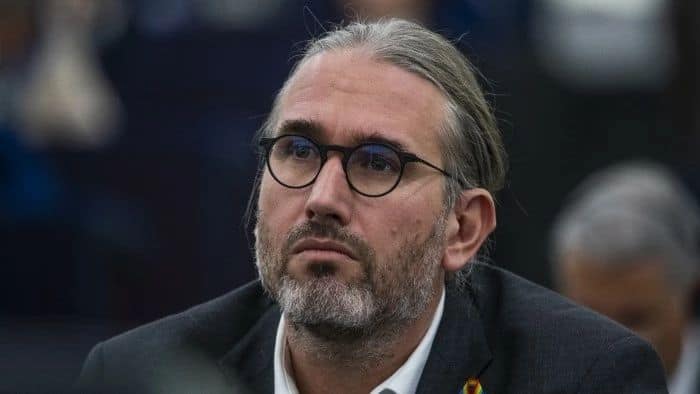
At the 2024 Chemical Watch conference in Brussels, European Parliament Vice-President Martin Hojsík (Renew, Slovakia) warned that delaying the revision of the EU’s Registration, Evaluation, Authorisation and Restriction of Chemicals (REACH) Regulation would severely impact industry. MEP Hojsík, who is also a member of the Parliament’s Environment, Public Health and Food Safety Committee (ENVI), argued any delay in revising REACH would create uncertainty for businesses and that the legal framework should be simplified.
UPCOMING EVENTS
- European Sustainable Chemicals Conference| Brussels, 19 November 2024
- Chemical Recycling Europe Forum | Brussels, 27 November 2024
- Meeting of CARACAL | 18-19 December 2024