Event Recap: Fluoropolymers in Focus - A Differentiated Approach to the PFAS Restriction
▶ Watch the event highlights video
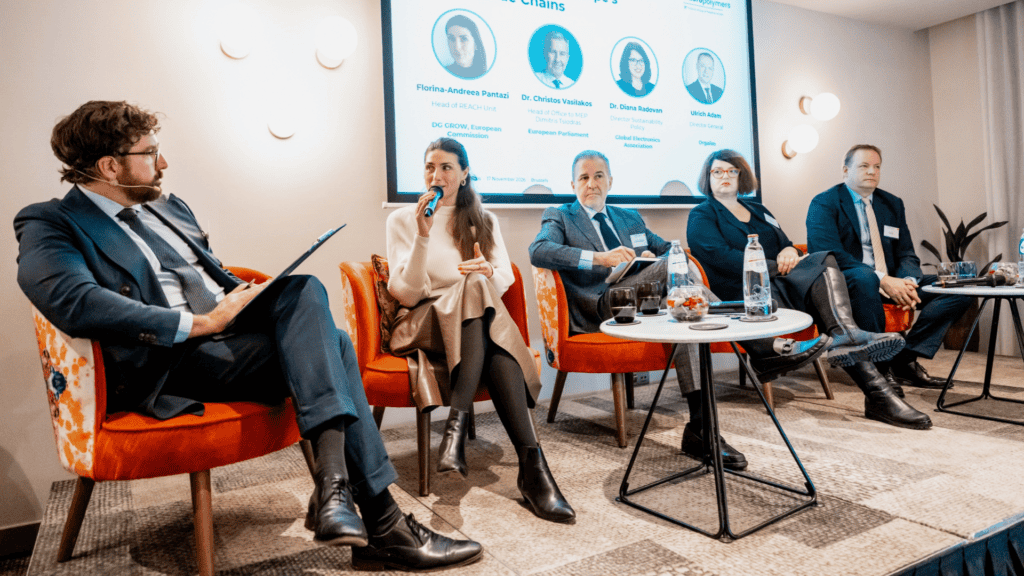
– On 17 November 2026, the Fluoropolymers Product Group (FPG) of Plastics Europe brought together more than 70 stakeholders from EU and national institutions, industry, the fluoropolymer value chain and academia in Brussels for Fluoropolymers in Focus: A Differentiated Approach to the PFAS Restriction. The event provided a space for a candid, evidence-based discussion on fluoropolymers and the proposed PFAS restriction under REACH.
The Risk Assessment Committee (RAC) has adopted its opinion, and the Socio-Economic Analysis Committee (SEAC) is expected to conclude by the end of 2026, so the file is approaching the next stage of EU decision-making. Two panels looked at two questions: why fluoropolymers matter to Europe’s critical value chains, and how environmental risks can be managed across the lifecycle.
FPG also announced the upcoming launch of its Manufacturing Programme 2.0, the next phase of industry’s efforts to reduce manufacturing emissions. Programme 1.0 focuses on non-polymeric PFAS emissions linked to polymerisation aid technology, and Programme 2.0 extends this to non-polymeric PFAS emissions across the full manufacturing process.
Fluoropolymers and Europe’s Critical Value Chains
The first panel looked at why fluoropolymers matter to Europe’s industrial competitiveness and economy, even though they represent only a small component of complex products. Speakers pointed to their importance in electronics, industrial machinery and technologies supporting Europe’s green and digital transitions.
Substitution was a central theme. Speakers stressed that it must be assessed at system rather than component level. They warned that lengthy redesign and recertification processes and a lack of viable alternatives can cause severe production disruptions. This could put European production at risk, affect investment, and deepen strategic dependencies.
Managing the Lifecycle: From Manufacturing to End of Life
The second panel discussed how effective lifecycle management can support the continued use of fluoropolymers under strict emissions controls.
On manufacturing, speakers stressed the importance of clear, enforceable requirements across the full manufacturing process, backed by best available techniques and robust monitoring. The Fluoropolymers Manufacturing Programme was highlighted as a practical example of site-level emissions management.
On end of life, new full-scale research shows that incineration facilities, working under regulatory conditions, can achieve destruction efficiencies of 99.9999% for fluoropolymers. This makes incineration a PFAS sink rather than a source. These findings provide new scientific evidence on earlier assumptions in the restriction process and conclude that incineration is an effective end-of-life treatment solution for fluoropolymers.
Looking ahead
The discussions underlined the importance of a differentiated approach to the PFAS restriction: one that is science-based and proportionate, reflects industrial realities and addresses emissions.
Environmental protection and European competitiveness can go hand in hand if regulation targets the sources of risk.
As the proposal moves forward, FPG will continue engaging with policymakers and the value chain to support an evidence-based outcome that protects the environment while safeguarding Europe’s industrial competitiveness.